

Three Best Ways to Build Immunity in Young Pets for Lifelong Benefits: Combining Science with Natural Solutions

The early days of a puppy’s or kitten’s life are not just cute—they’re critical. During this rapid phase of growth, your pet’s immune system is developing and learning to protect the body from threats. As veterinary professionals, we know that foundational immunity can shape a pet’s health throughout its lifetime.
That’s why it’s essential to begin with the right approach to nutrition and immune-building support. In this post, we’ll explore three powerful ways to boost immunity in young pets, including why Pawlac Lactose-Free Milk for Pets is emerging as a preferred puppy and kitten milk replacer backed by both science and nature.
1. Start Early with a Complete & Balanced Milk Replacer
Colostrum from the mother provides initial immune support, but not all pets are lucky enough to nurse naturally. Orphaned, rejected, or supplementary-fed puppies and kittens need a scientifically balanced milk replacer to mimic the nutritional complexity of a mother’s milk.


Pawlac Lactose-Free Milk steps in as a veterinary-grade solution, providing:
High-quality proteins for immune cell development
Healthy fats for brain and nervous system support
Essential vitamins and minerals (like Vitamin E, A, D, zinc, selenium) that enhance immune response and reduce oxidative stress [1]
It’s also lactose-free, processed with lactase enzyme to prevent common issues like bloating or diarrhea in young pets. This gentle digestion ensures nutrients are absorbed effectively, right from Day 1.
🩺 “Nutrition in the neonatal phase significantly determines immune programming in dogs and cats.” — NRC, Nutrient Requirements of Dogs and Cats [2]
2. Integrate Functional Natural Ingredients: Curcumin & Piperine
Beyond basic nutrition, nature offers remarkable immune-boosting compounds. Two of the most promising for pets are:
🟡 Curcumin
Derived from turmeric, curcumin is a powerful anti-inflammatory and antioxidant. It helps:
Reduce chronic inflammation in the gut and joints
Support liver detoxification
Modulate immune response and enhance disease resistance [3]
⚫ Piperine
Extracted from black pepper, piperine significantly enhances the bioavailability of curcumin by up to 2000% [4], making the pair far more effective when consumed together.
Pawlac Milk is uniquely infused with both curcumin and piperine, creating a golden milk that naturally strengthens your pet’s immunity, reduces inflammation, and promotes long-term wellness—all in a creamy, pet-approved taste.
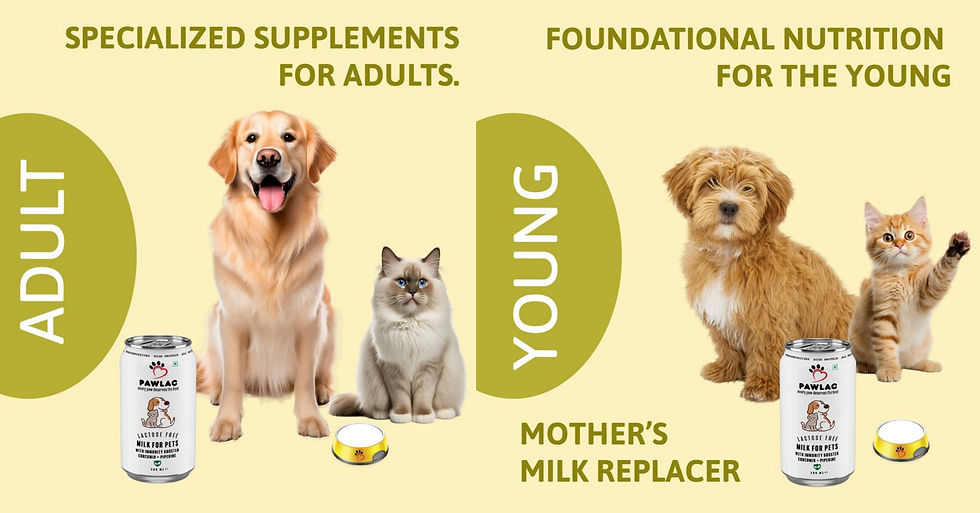
3. Feed Consistently & Avoid Nutritional Gaps
Just like in human children, consistency is key in young pets. A sudden gap in nutrients can weaken immunity and delay development. That's why Pawlac comes in a convenient pack of 15 pre-portioned 200ml cans—ready to serve anytime, anywhere.
No mixing or mess
Travel-friendly for pet parents on the go
Easy to measure and manage daily intake
Helps maintain routine and regular nourishment
🐾 “Regularity in feeding contributes to better gut microbiota balance and immune resilience.” — British Journal of Veterinary Nutrition [5]

Why Vets Are Recommending Pawlac
Scientifically balanced formula made under strict quality controls at Fortune Dairy’s own facility
Ideal puppy and kitten milk replacer—not just for newborns, but also as a health-boosting supplement for adult and senior pets
Supports bone health, coat shine, vitality, and digestive wellness
Vet-trusted, pet-approved, and travel-ready

Conclusion: Early Nutrition, Lifelong Immunity
By combining the best of veterinary science with proven natural ingredients, Pawlac empowers pet parents to give their puppies and kittens the healthiest start possible.
If you’re looking for a complete, convenient, and effective way to support your pet’s immune system from the very first day, choose Pawlac Lactose-Free Golden Milk.
🛒 Buy our regular pack of 15 x 200ml Cans
🔗 Shop on Amazon https://amzn.in/d/22FNXef or visit www.pawlac.com

Citations:
[1] Freeman et al., “Nutritional Modulation of the Immune System” – Journal of Veterinary Internal Medicine
[2] NRC (2006). Nutrient Requirements of Dogs and Cats, National Academies Press
[3] Hewlings SJ, Kalman DS. “Curcumin: A Review of Its Effects on Human Health” – Foods (2017)
[4] Shoba G. et al. “Influence of Piperine on the Pharmacokinetics of Curcumin in Animals and Human Volunteers” – Planta Medica
[5] “Diet Consistency and Immune Function in Companion Animals” – British Journal of Veterinary Nutrition


Comments